

The Role of Analytics in Modern Football Strategies
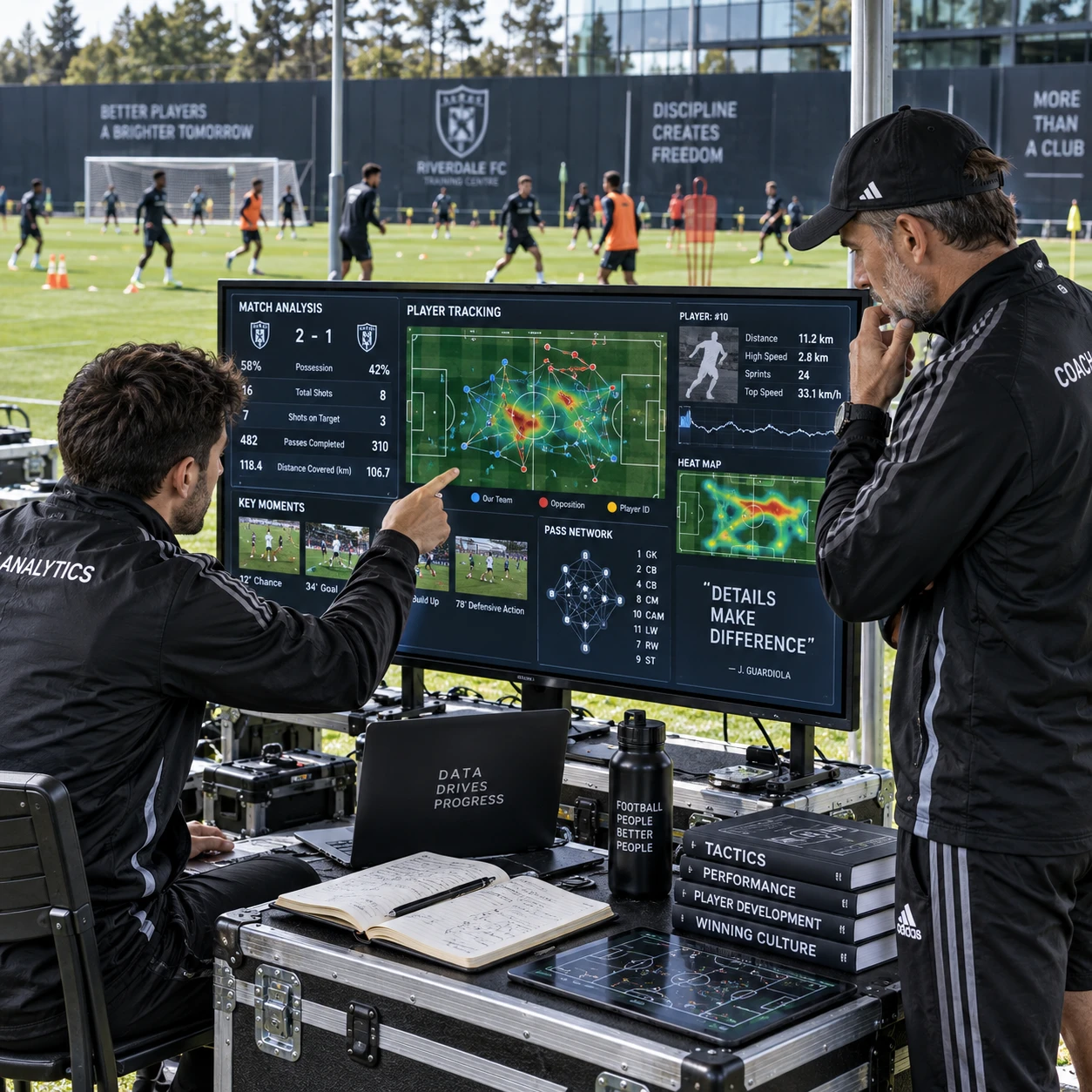
Football analytics helps clubs turn match, training and scouting information into better-informed decisions. From expected goals (xG) to GPS tracking, these tools can reveal patterns that are difficult to spot in real time. They support coaches, players and recruitment teams, but they do not explain every moment or guarantee results.
How Football Analytics Has Evolved
Football analytics has evolved from basic score and event records into a combination of match data, video analysis and player tracking. Clubs now use that information across tactical planning, recruitment and performance work.
For decades, coaches relied mainly on observation, experience and statistics such as goals, shots and possession. Those remain useful, but modern systems can record where actions happen, which players are involved and how the team moves as a unit. Analysts can link a pass, press or shot to video, then review the sequence with the coaching staff.
This changes the questions a team can ask. Instead of merely counting completed passes, analysts might examine whether a team progressed the ball through central areas, how often it bypassed pressure, or what happened after possession was lost. Coaches can then compare the numbers with footage and decide whether a pattern matters.
Data availability varies between leagues and clubs. Top-flight teams may have dedicated analysts and detailed tracking feeds, while smaller clubs often work with more limited resources. The underlying principle is the same: use evidence to sharpen a football decision, not to make the decision automatically.
The Metrics Behind Match Analysis
Match analysis combines measures such as expected goals, possession, passing and player movement to describe what happened and how it happened. No single metric gives a complete verdict on a performance.
Expected goals (xG) estimates the likelihood that a particular shot will result in a goal, based on features such as its location, angle and the type of chance. A team with higher xG than its opponent may have created better chances, even if the final score went the other way. xG describes chance quality; it does not predict with certainty whether a shot will score.
Possession and passing metrics add detail to that picture. Teams may track where possession occurred, how often passes moved the ball forward, and whether players found teammates between defensive lines. A high possession share alone says little about control if the ball circulates harmlessly far from goal.
Player movement data can show spacing, speed, distance covered and the timing of runs. Analysts may connect those patterns to match events: did a winger stretch the back line, or did a midfielder arrive late in the box? These numbers become most useful when paired with video and a clear tactical question.
- Event data: shots, passes, tackles, interceptions and other recorded actions.
- Tracking data: player and ball positions over time, where available.
- Context: score, opponent, game state, role and match footage.
Using Data to Shape Tactics
Coaches use analytics to test tactical ideas, identify opponent tendencies and assess how a team performs during pressing, possession and transitions. The findings can inform a plan, but the players still have to execute it under pressure.
For pressing, analysts can examine where opponents lose the ball, which players receive facing their own goal and how quickly a team closes space after a trigger. Video helps confirm whether the press was coordinated or whether one player simply chased the ball. That distinction matters: an isolated sprint can open a passing lane instead of forcing a turnover.
Spacing and passing networks offer another view. If a team struggles to progress through midfield, the issue could be poor distances between players, a lack of forward options or an opponent blocking the central route. Analysts can review sequences and compare them with successful attacks to help coaches adjust positioning.
Transition analysis looks at the seconds after possession changes. A team might counter quickly after winning the ball, or prioritize getting compact after losing it. Match data can reveal how often those situations occur and where they lead; video shows the decisions behind them. Before a fixture, staff can also study an opponent’s tendencies, such as how it defends crosses or responds to pressure on its full-backs.
The practical test is whether a finding leads to a specific instruction. “Our press is poor” is too broad. “The far-side midfielder needs to narrow sooner when the ball goes wide” gives players something they can rehearse.
Analytics in Recruitment and Squad Planning
Analytics supports recruitment by helping clubs find players whose skills, role and likely cost fit a team’s needs. It can widen the scouting search, but it cannot determine a player’s suitability from statistics alone.
A club might begin with a tactical requirement: a forward who presses aggressively, a centre-back who can defend space behind the line, or a midfielder who progresses possession under pressure. Recruitment analysts can use performance data to shortlist players with relevant actions, then scout them in person or through video analysis.
Role matters more than a league-wide ranking. A player’s pass completion can look modest because they attempt difficult forward passes, while a high percentage may reflect safe choices. Analysts need to compare like with like, account for a player’s team and competition, and consider age, minutes played and injury history.
Data can also flag potential value. A less familiar player may show strong movement, defensive work or chance creation despite receiving little attention in headline statistics. Scouts then assess details that are harder to quantify, including decision-making, communication and how the player responds to setbacks.
Squad planning adds a longer view. Clubs can map depth by position, contract timelines and player availability. The trade-off is that forecasts carry uncertainty: a transfer, coaching change or new role can alter performance quickly. Analytics narrows the search; scouting and football judgment decide whether the fit is convincing.
Tracking Performance and Player Development
Performance analytics combines match statistics, training observations and physical tracking to help coaches develop players and manage workload. GPS and tracking data can describe physical demands, but those measures need to be interpreted alongside health and training context.
GPS devices used in training can record measures such as distance covered, high-speed running and accelerations. Sports-science staff may compare a session with a player’s usual workload or the demands of their position. A sudden increase can prompt a conversation or a closer review, but a single reading should not be treated as a diagnosis.
On the pitch, coaches can use video and match data to give specific feedback. A full-back might review when to step forward to press, while a midfielder studies how body position affects the next pass. Individual clips tied to a clear objective are often more useful than a dashboard full of numbers.
Development also requires patience. A young player may contribute little in goals or assists while improving their scanning, positioning or defensive cover. Those details may not appear in a simple scorecard, so analysts and coaches should combine physical indicators, technical work, match footage and regular conversation with the player.
The Limits of Data in Football
Football data has limits because metrics depend on context, sample size and interpretation. Numbers can support a judgment, but they cannot fully capture pressure, communication, confidence or every tactical instruction.
A short run of matches can produce misleading conclusions. A striker may have a low goal tally despite consistently reaching good shooting positions, while a brief scoring streak may exaggerate a player’s underlying output. Analysts should separate what a metric measures from what it cannot establish, and avoid treating small samples as permanent traits.
Definitions also differ across providers. A pressure, duel or chance may be coded in different ways, which makes direct comparisons risky unless the data source and method are consistent. Teams should ask how a number was collected before using it to rank players or evaluate a tactic.
- Ignoring context: Comparing players in different roles or team systems can produce unfair conclusions. Compare relevant roles and review the footage.
- Overvaluing one metric: Possession or xG cannot summarize an entire match. Use several measures that answer a specific question.
- Confusing correlation with cause: A team may press less in matches when leading, but that does not prove reduced pressing caused the result. Check game state and tactical intent.
The strongest process is a loop: analysts identify a pattern, coaches examine the football context, players receive clear guidance, and staff review whether the change helped. Experience remains essential because it helps people ask better questions of the data.
What Comes Next for Football Analytics
Football analytics is likely to become richer as tracking systems connect player movement, ball actions and video more closely. Better tools can make patterns easier to review, though their value will still depend on the quality of the questions teams ask.
More detailed tracking may help analysts study off-ball movement, defensive shape and the timing of support runs in greater depth. Video systems that link events to relevant clips can also reduce the time spent searching through full matches. These developments may help coaches deliver feedback sooner and tailor it more closely to a player’s role.
There are practical limits. Detailed systems can be costly, data may be incomplete, and a faster report is not automatically a better decision. Clubs also need to handle player information responsibly and ensure that physical tracking does not replace medical assessment or direct communication.
For supporters, the clearest way to read football analytics is to ask three questions: What does this measure? What context is missing? What decision could it reasonably inform? That approach makes statistics more than a collection of numbers. It shows how data, video, scouting and coaching judgment work together to shape the modern game.