

Iconic Football Stadiums Around the World and Their Stories
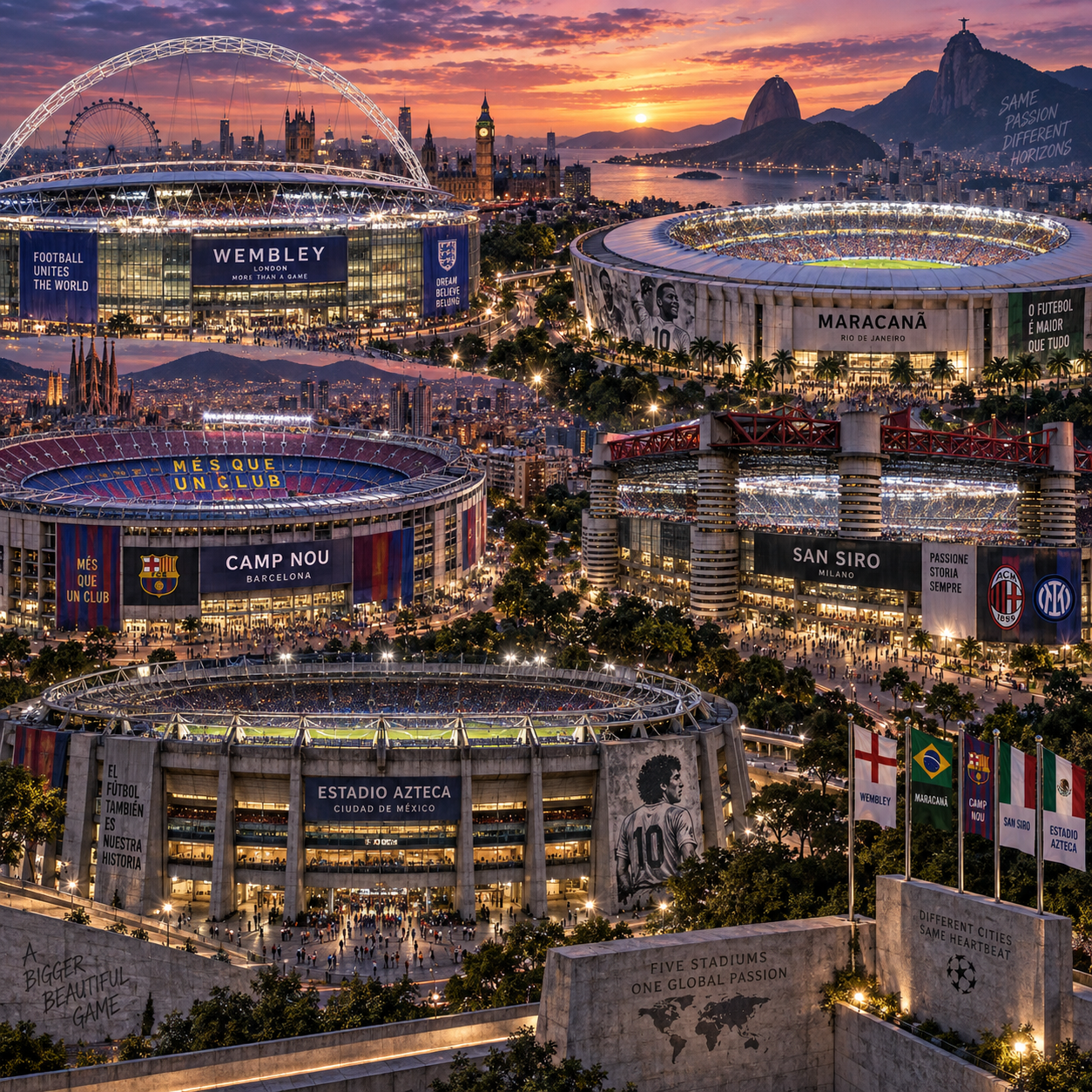
Football stadiums are more than places where matches take place. They are landmarks of national identity, club loyalty and collective memory. A famous ground can be recognized by its architecture, its crowd, its chants or the matches that changed football history.
From the England national team’s home at Wembley Stadium to the intense European nights of the Santiago Bernabéu, these venues give football statistics and news a human setting. Results become stories because they happen in places with character.
What Makes a Football Stadium Iconic?
An iconic football stadium combines history, atmosphere, architecture and sporting importance. Its identity grows through major matches, loyal supporters, cultural symbolism and the memories shared by several generations.
Capacity alone does not make a stadium famous. A large venue may feel anonymous, while a smaller ground can become unforgettable because of its design or matchday culture. The strongest stadium identities usually come from five connected elements:
- History: finals, World Cup matches, title celebrations and famous goals give a venue a lasting timeline.
- Architecture: distinctive roofs, steep stands, twin towers or an enclosed bowl make a stadium visually recognizable.
- Supporters: songs, choreographies and local traditions create an atmosphere that television cannot fully reproduce.
- Football role: a ground may represent a national team, a historic club or an entire football city.
- Continuity: repeated visits by generations of fans turn sporting memories into family and community heritage.
There is also a useful distinction between a stadium’s event legacy and its everyday identity. Wembley is closely associated with national finals and England, while Anfield’s reputation is built equally through weekly club football and supporter rituals.
Wembley Stadium: England’s National Football Landmark
Wembley Stadium is England’s national football landmark, serving as the home of the England men’s and women’s teams and a major venue for domestic cup finals. Its symbolic power comes from national football, historic finals and the familiar arch that dominates London’s skyline.
The original Wembley opened in 1923 and became associated with the 1966 Football World Cup final, when England won the tournament on home soil. The rebuilt stadium, opened in 2007, continued that role while adding a modern setting for international matches, the FA Cup Final and major European fixtures.
Wembley has also hosted UEFA Champions League finals, giving it significance beyond English football. Its broad seating bowl can create a grand sense of occasion, especially when England plays, although the experience differs from the compact intensity of a traditional club ground.
For supporters, Wembley represents a destination as much as a home. Fans arrive for semifinals, playoff matches and finals with the knowledge that one afternoon can define an entire season. That concentration of high-stakes football explains why the stadium remains central to England’s sporting imagination.
Camp Nou and Santiago Bernabéu: Spanish Football Giants
Camp Nou and Santiago Bernabéu represent two contrasting identities in Spanish football: Barcelona’s association with style, regional culture and club philosophy, and Real Madrid’s connection with global success, European ambition and a demanding winning tradition.
Camp Nou and Barcelona’s football identity
Camp Nou, historically known as the home of FC Barcelona, has been one of football’s most recognizable stadiums since opening in 1957. Its scale reflects Barcelona’s status as a global club, while its history connects matchday football with Catalan cultural identity.
The stadium has witnessed domestic title races, famous Clásico encounters and memorable UEFA Champions League nights. Barcelona’s possession-based teams gave the ground a distinctive rhythm: long periods of control followed by sudden changes of pace near the penalty area.
Camp Nou is also an example of how modern football changes historic venues. Renovation and redevelopment can improve comfort, accessibility and commercial performance, but supporters often worry that modernization may dilute the atmosphere created by older terraces and familiar routines.
Santiago Bernabéu and European nights
The Santiago Bernabéu is Real Madrid’s home and one of the defining stages of European club football. Its story is closely linked to the club’s record of domestic titles, European trophies and high-pressure comebacks.
Named after long-serving club president Santiago Bernabéu, the stadium has hosted generations of elite players and major matches. The famous Clásico rivalry gives it a national profile, while UEFA Champions League nights have built its reputation as a place where momentum can change quickly.
Its redevelopment has introduced a modern exterior and a retractable roof while preserving the stadium’s central place in Madrid. The contrast with Camp Nou is revealing: both grounds express immense club identities, but their emotional languages differ according to history, city and sporting philosophy.
Maracanã and Estadio Azteca: Stadiums of World Cup History
Maracanã and Estadio Azteca are among the most important international football stadiums because both have hosted decisive Football World Cup matches and carry deep national sporting memories.
Maracanã in Rio de Janeiro
Rio de Janeiro’s Maracanã is inseparable from Brazilian football culture. Opened for the 1950 World Cup, it became a vast national stage where Brazil’s hopes, disappointments and celebrations were experienced collectively.
The stadium has hosted World Cup matches in 1950 and 2014, as well as major domestic fixtures and international events. Its story includes the emotional weight of Brazil’s home tournaments, which makes the venue meaningful even to supporters whose clubs do not play there regularly.
Maracanã also reflects the changing economics and safety standards of football. Renovations altered seating layouts and the matchday experience, creating better facilities while prompting debate about whether modern stadiums can retain the informal energy of older eras.
Estadio Azteca in Mexico City
Estadio Azteca holds a unique place in World Cup history because it hosted matches at the 1970 and 1986 tournaments. It is the only stadium to have staged two World Cup finals, a distinction that gives its name unusual weight in international football.
The venue is remembered for the 1970 final, when Brazil defeated Italy, and for the 1986 tournament, associated with Diego Maradona and Argentina’s triumph. Those matches made Estadio Azteca a reference point for tactical change, individual brilliance and the drama of knockout football.
Its high altitude and distinctive bowl add another layer to the stadium’s identity. Visiting teams face physical and environmental conditions that can influence match preparation, making the venue important in both football history and competitive analysis.
San Siro, Old Trafford, and Anfield: The Power of Club Football
San Siro, Old Trafford and Anfield show how club stadiums build influence through weekly rituals, local identity and supporter culture. Their reputations come as much from ordinary league nights as from finals and international headlines.
- San Siro: Shared by AC Milan and Inter Milan, the stadium combines imposing concrete tiers with the drama of the Milan derby. Its two-club history gives it an unusual emotional complexity, while its European nights connect it with Italian football’s tactical heritage.
- Old Trafford: Manchester United’s home is known as the Theatre of Dreams and has hosted domestic title races, UEFA Champions League matches and generations of influential players. Its size and history create a grand setting, though the atmosphere can vary significantly between high-profile fixtures and less decisive league games.
- Anfield: Liverpool’s ground is closely associated with the Kop, supporter singing and dramatic European comebacks. The stadium’s intimacy helps turn collective noise into part of the match narrative, especially during night games.
These grounds also demonstrate that atmosphere is difficult to measure with one statistic. Capacity, roof design and sightlines matter, but so do kickoff time, match importance, ticket distribution and the confidence of the home team.
San Siro offers visual grandeur and derby tension. Old Trafford carries the scale of a global club. Anfield often feels more concentrated and participatory. Choosing one as the most atmospheric depends on whether a fan values architectural spectacle, historical expectation or continuous crowd involvement.
How Stadiums Become Part of Football’s Story
Stadiums become part of football’s story when repeated sporting events turn a physical location into a shared memory. Records, trophies, rivalries, iconic goals and fan traditions give meaning to concrete, steel and seating.
A famous goal is rarely remembered in isolation. Supporters recall the minute, the opponent, the competition and the sound that followed. The same applies to a comeback in the UEFA Champions League, a World Cup upset or a title celebration that brings an entire city into the streets.
Stadiums also preserve continuity during changes in football. Players retire, managers move on and club ownership can change, but the venue remains a reference point. This is why older supporters can connect their memories with younger fans who know the same ground through modern broadcasts and digital statistics.
There is a practical lesson for football analysis: context matters. A team’s home record, expected goals, possession share or knockout history becomes more meaningful when readers understand the pitch, crowd and pressure surrounding the numbers.
A Football Fan’s Guide to Comparing Iconic Stadiums
To compare iconic football stadiums fairly, assess their capacity, location, age, club or national-team role, atmosphere and historical significance together. No single factor can explain why a venue matters.
| Comparison point | What to examine |
|---|---|
| Capacity | How many supporters the venue accommodates and whether its size creates scale or distance. |
| Location | The stadium’s relationship with the city, transport network and surrounding football culture. |
| Age and design | Whether historic features remain and how redevelopment has changed the matchday experience. |
| Football role | Club home, national stadium, tournament venue or a combination of these functions. |
| Atmosphere | Supporter traditions, acoustics, crowd proximity and the importance of the fixture. |
| Historical significance | World Cup matches, finals, derbies, records, famous goals and title celebrations. |
Fans planning a stadium visit should check the fixture calendar first, then investigate official tour and ticket information. A museum visit can explain a ground’s history, but a competitive match reveals how the stadium sounds, moves and responds under pressure.
It is also wise to avoid comparing venues only through television images. Broadcast cameras emphasize the pitch and selected stands, while the live experience depends on entry routes, seating position, acoustics and how close supporters are to the action.
Frequently Asked Questions
What is the most iconic football stadium in the world?
There is no universally supported single choice. Wembley Stadium, Maracanã, Camp Nou, Santiago Bernabéu, San Siro, Old Trafford, Estadio Azteca and Anfield each represent different combinations of history, atmosphere and cultural identity.
Which stadiums have hosted major World Cup matches?
Maracanã hosted matches at the 1950 and 2014 Football World Cups, while Estadio Azteca hosted tournaments in 1970 and 1986. Wembley also hosted the 1966 World Cup final.
Which football stadiums are known for the best atmosphere?
Anfield is famous for supporter singing, San Siro for derby intensity, and Old Trafford for its scale and historic expectations. Atmosphere varies with the opponent, competition and importance of the match.
What should fans consider when planning a stadium visit?
Consider the fixture, official ticket availability, seating position, transport, stadium tours and the venue’s historical features. A match offers the strongest atmosphere, while a tour provides more time to explore the architecture and museum.
Iconic football stadiums remain central to the sport because they connect numbers with emotion. They host trophies and rivalries, but they also hold ordinary conversations, repeated songs and memories passed between generations. That is why a stadium’s story continues long after the final whistle.