

How VAR Is Changing the Game: The Pros and Cons of Video Review in Football
Few things in modern football spark debate quite like the moment the referee points to the corner flag and raises a finger — signalling a VAR check is underway. Within seconds, a stadium that was celebrating goes quiet. Fans at home lean closer to their screens. And somewhere in a darkened review room, a match official is rewinding footage frame by frame.
VAR has been part of top-level football since IFAB (the International Football Association Board) formally approved it in 2018. In the years since, it has overturned hundreds of incorrect decisions — and ignited almost as many arguments. This piece breaks down exactly how the system works, what it gets right, where it goes wrong, and whether football is genuinely better for it.
What Is VAR and How Does It Work?
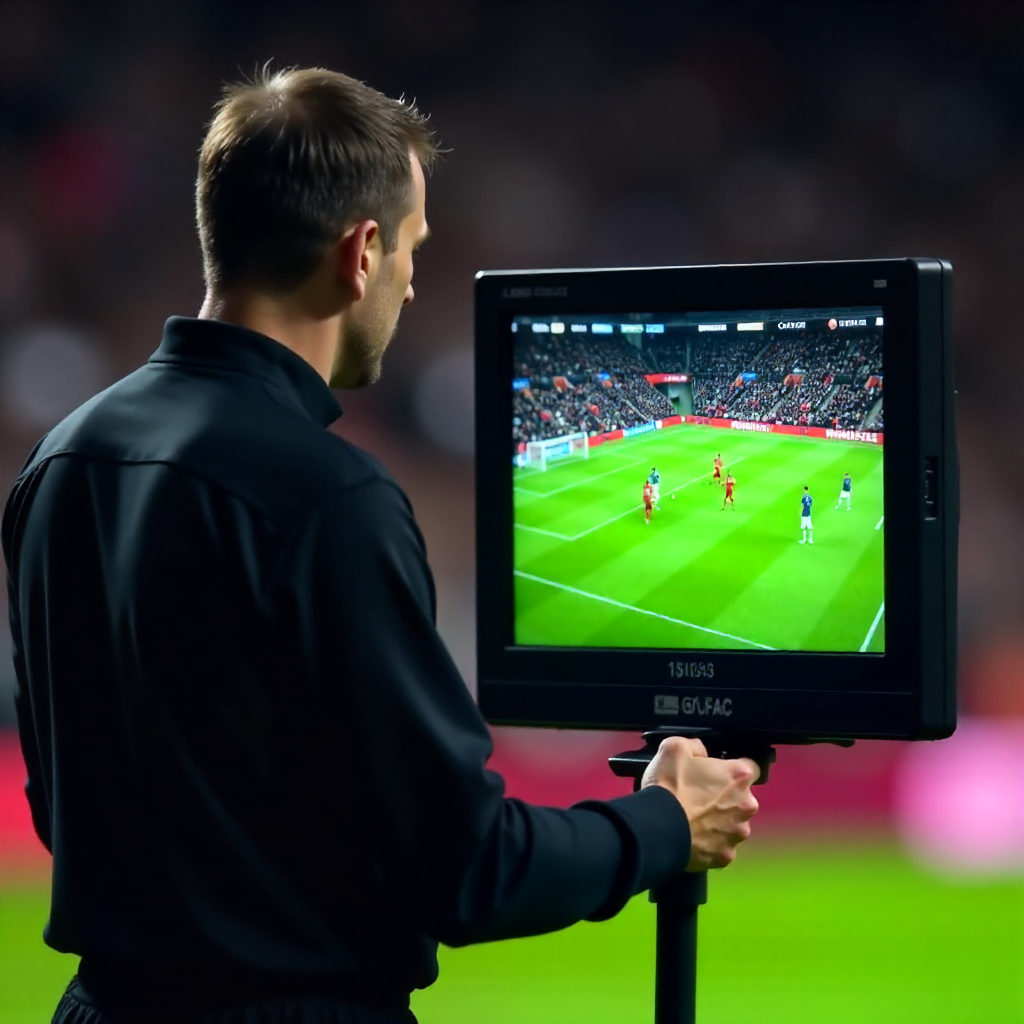
VAR (Video Assistant Referee) is a system in which a dedicated team of match officials reviews footage of key incidents from a remote video operations centre, then communicates with the on-field referee to correct clear and obvious errors.
The on-field referee retains final authority. VAR does not make decisions — it flags potential errors and either advises the referee directly through an earpiece or recommends a pitchside monitor review, where the referee watches the footage themselves before ruling. That distinction matters. VAR is designed as a safety net, not a replacement for human judgment.
The process is triggered automatically for certain categories of incident (more on those below), or the VAR team can proactively flag something the referee missed. Checks typically take between 30 seconds and two minutes, though complex offside calls have stretched considerably longer — which is where a lot of the frustration sets in.
The Key Moments VAR Is Designed to Correct
VAR is only authorised to review four specific categories of decision, a scope defined by IFAB to prevent the system from second-guessing every call on the pitch.
- Goals — including fouls, offsides, and handball in the build-up to a goal
- Penalty decisions — whether a foul inside the box was correctly awarded or missed
- Direct red card incidents — serious foul play, violent conduct, or denial of an obvious goal-scoring opportunity
- Mistaken identity — when the referee disciplines the wrong player
Yellow cards, throw-in decisions, corners — none of these fall within VAR's remit. That boundary is intentional. The system was built to eliminate match-defining errors, not to audit every refereeing call over 90 minutes.
It's also worth distinguishing VAR from goal-line technology, which preceded it. Goal-line tech uses sensors and cameras exclusively to confirm whether the ball crossed the line — a binary yes/no with no human review involved. VAR is far broader in scope and far more open to interpretation, which is precisely why it generates more controversy.
The Case For VAR — Where It Gets It Right
The strongest argument for VAR is simple: it corrects decisions that would otherwise stand and change the outcome of matches. That's not a small thing in a sport where a single goal can determine a title or relegate a club.
Before VAR, a striker could handle the ball into the net and the goal would count if the referee missed it. A player could be violently elbowed off the ball without consequence if it happened away from the referee's sightline. These weren't edge cases — they were regular features of the game, accepted as part of football's imperfect charm by some, and as a fundamental unfairness by others.
In the Premier League, VAR has demonstrably reduced the number of incorrect match-changing decisions. Penalty calls that were previously borderline guesses are now reviewed with multiple camera angles. Red card incidents are scrutinised properly. Players who might have escaped serious sanctions for off-the-ball conduct are now held accountable.
There's also a secondary benefit: referee accountability. Knowing that every major call will be reviewed has arguably made on-field officials more careful, more consistent, and less susceptible to being pressured by players surrounding them. The pitchside monitor review, in particular, gives referees a tool to reconsider without losing face — they're not being overruled, they're being shown something they couldn't see.
The Case Against VAR — Where It Falls Short
The criticism of VAR isn't that accuracy is bad — it's that the way the system operates undermines some of what makes football worth watching in the first place.
The most immediate problem is the delayed celebration. A goal goes in. Fans erupt. Players sprint toward the corner flag. Then — nothing. Everyone freezes, waiting. The check drags on. By the time the goal is confirmed, the emotional peak has passed. For fans in the stadium especially, this has measurably damaged the match-day atmosphere that clubs and broadcasters spend millions trying to create.
There's also the consistency problem. VAR decisions — particularly around handball and penalty incidents — vary enough between matches and competitions that fans genuinely cannot predict how a given situation will be ruled. When the system produces outcomes that feel arbitrary, it doesn't just frustrate supporters; it erodes trust in officiating altogether.
And then there's game flow. Stoppages for VAR checks have contributed to inflated stoppage time figures across top leagues. A match that nominally runs 90 minutes can now routinely tip past 100 with added time. Whether that's an acceptable trade-off for accuracy is a legitimate debate — but it is a trade-off.
The Offside Debate — VAR's Most Controversial Battleground
Offside decisions have become the most divisive aspect of VAR, and for good reason. The technology enables officials to draw lines across frozen frames to determine whether a shoulder, armpit, or big toe was fractionally ahead of the last defender — and to rule out goals on that basis.
The problem is philosophical as much as technical. Offside was conceived as a rule to prevent goal-hanging, not to punish a striker whose elbow is two centimetres beyond a defender's hip as they both sprint forward. When a goal is disallowed after a 90-second check reveals a margin that's invisible to the naked eye, many fans — and plenty of players — question whether the letter of the law is being applied at the expense of its spirit.
The Champions League and Premier League have both faced heavy criticism for marginal offside calls. In response, IFAB has been exploring a "semi-automated offside" system that uses skeletal tracking data to produce faster, more consistent results. Whether that solves the underlying philosophical tension remains to be seen.
The deeper issue is that VAR has exposed a flaw in the offside rule itself. The technology didn't create the problem — it just made it impossible to ignore.
How Different Leagues and Competitions Are Adapting VAR
VAR is not applied identically across all competitions, and the differences reveal how much the system is still being calibrated.
The Premier League has one of the more conservative implementations — referees are encouraged to make the on-field call and only go to the pitchside monitor when the VAR team identifies a clear and obvious error. In contrast, some competitions have seen referees defer to the monitor far more readily, which extends review times and shifts decision-making authority away from the on-field official.
UEFA's Champions League adopted semi-automated offside technology for the 2023-24 season, reducing the time taken for offside checks significantly. Early results suggested faster decisions and fewer borderline calls overturned on margins that were essentially meaningless in footballing terms.
Some lower-tier leagues and domestic cups have opted not to implement VAR at all, citing cost and infrastructure requirements. Others have trialled it and pulled back. The Scottish Premiership, for example, has faced persistent criticism over inconsistent VAR application since its introduction. The technology is only as good as the processes and training surrounding it.
Is VAR Making Football Better or Worse? The Verdict
VAR makes football more accurate. Whether it makes football better depends on what you value most about the sport.
If you believe the primary goal of officiating is to get the big calls right, VAR is a genuine improvement. Fewer match-defining errors. Greater accountability. A system that, at its best, removes the kind of injustice that haunts clubs and fans for decades.
If you believe football's appeal is rooted in its spontaneity, its emotional peaks, and the shared experience of tens of thousands of people reacting to the same moment — VAR introduces friction that the sport didn't have before. The goal that isn't celebrated until it's confirmed. The red card that's reversed two minutes later. The penalty that was given, then taken away, then reinstated.
The honest answer is that VAR is still a work in progress. The technology exists. The rules are there. What's still being figured out is how to apply them in a way that serves both accuracy and the experience of watching football. That's not a reason to abandon it — but it is a reason to keep pushing for improvements, particularly around offside automation and reducing review times.
Football has always evolved. VAR is part of that evolution, messy and imperfect as it currently is.
Frequently Asked Questions About VAR
What four types of decisions can VAR review in football?
VAR can review goals (including build-up fouls and offside), penalty decisions, direct red card incidents, and cases of mistaken identity when the referee disciplines the wrong player. All other decisions — including yellow cards and most free kicks — fall outside VAR's scope.
Why do offside VAR decisions take so long?
Offside checks require officials to identify the exact frame in which the ball was played, then draw calibrated lines across multiple points on both the attacker and the last defender. When margins are extremely tight, this process takes longer and is more prone to error. Semi-automated offside technology, now used in the Champions League, significantly reduces this time by using player-tracking data rather than manually drawn lines.
Can a manager or captain challenge a VAR decision?
No. Unlike American football's coach's challenge system, football has no formal mechanism for teams to request a VAR review. The VAR team initiates checks independently, and only the on-field referee can request a pitchside monitor review. Some have argued for introducing a limited challenge system, but IFAB has not adopted one as of 2026.
Has VAR been removed or suspended in any league?
Yes. Several lower-division leagues have trialled and then discontinued VAR due to cost, inconsistent application, or negative fan response. At the top level, no major league has removed VAR entirely, though the debate about reforming or replacing specific elements — particularly the offside application — remains active.
What is the difference between VAR and goal-line technology?
Goal-line technology uses sensors and high-speed cameras to give an instant, automated yes/no answer on whether the ball crossed the goal line. There is no human review and no judgment call involved. VAR, by contrast, covers a much broader range of incidents, requires human interpretation of footage, and can take minutes to resolve. Goal-line technology came first and remains far less controversial precisely because it removes subjectivity entirely.